ADVANTAGES OF FIBERGLASS

Lightweight

High Strength

Corrosion & Rust Resistant

Good Electrical Insulator

Weather Resistant

Low Maintenance

Durable & Long Lasting

FIBERGLASS IN WIND ENERGY

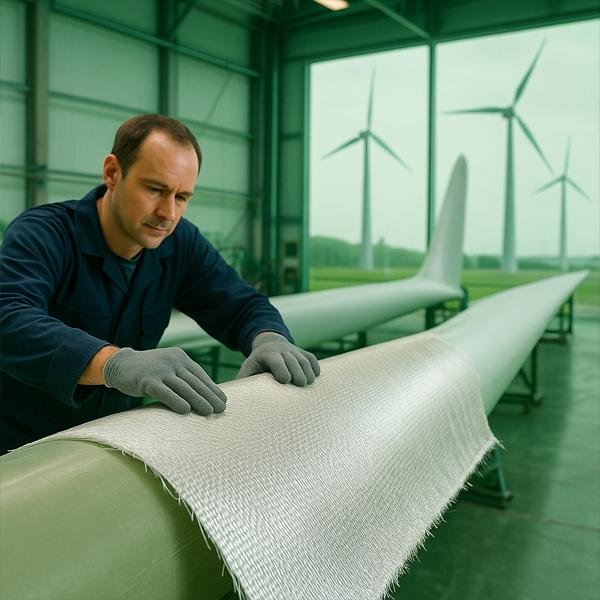
A modern utility-scale turbine (3–15 MW) contains 10–30 tonnes of glass fiber composites, with the blade accounting for ~95% of that mass.

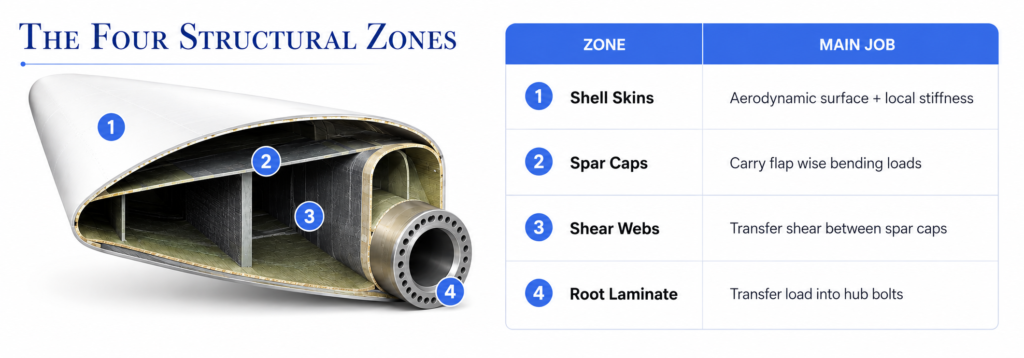
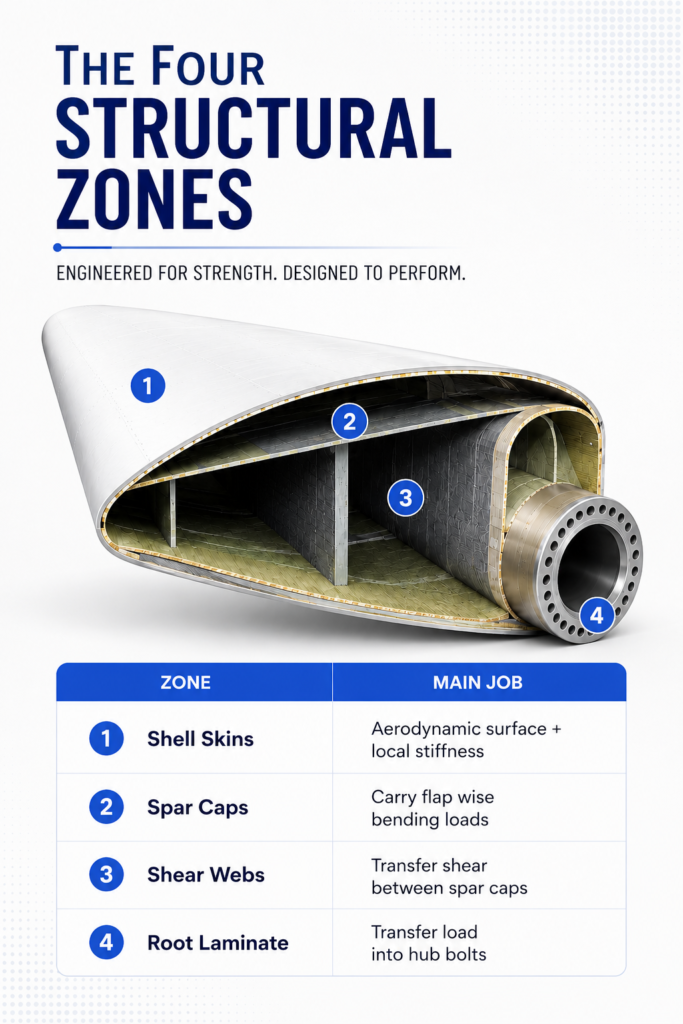
A blade is essentially a thin-walled composite box beam.

3-15MV

Turbine Capacity

10-30 Tonnes

Glass Fiber Composites

~95%

Mass in Blade

SHELL SKIN

Material
• E-glass biaxial/triaxial stitched fabrics
• Typical areal weight: 600-1,200 gsm
• Resin: epoxy (dominant) or vinyl ester
Function
• Maintain airfoil shape
• Resist buckling
• Carry torsion and edgewise loads
Typical Layup
• ±45° for torsion
• 0° axial stiffness
• 90° for transverse stability

SPAR CAPS

Material
• Made with unidirectional E-glass fabrics
• Oriented 0 deg along the blade length
Function
• Carry the majority of flapwise bending loads
Typical Layup
• 0° for maximum axial stiffness
• Additional ±45° layers for shear and stability

SHEAR WEBS

Material
• Typically plus/minus 45 deg E-glass biax ial fabrics
Function
•Core function is shear transfer between spar caps
Typical
• Thickness: typically 6-20 mm

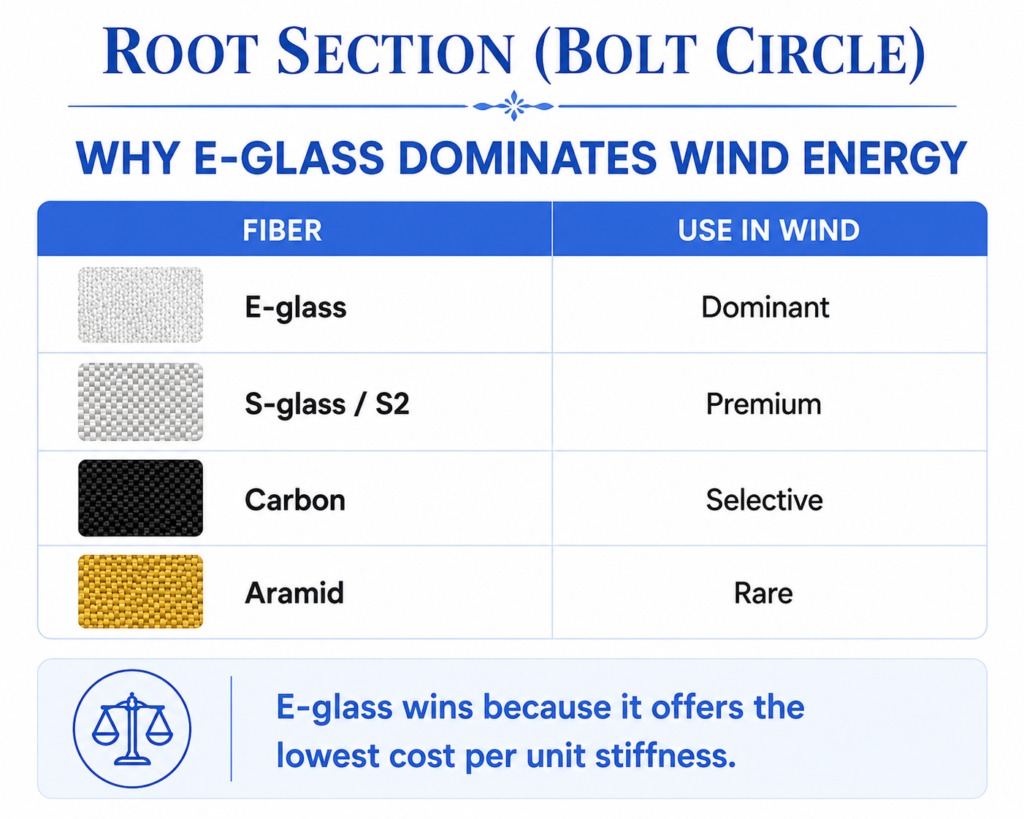
Where S2-glass is actually used

This is directly relevant to your product portfolio.
S2-glass is not used for the entire blade. It is used where fatigue strain is highest:
• Root transitions
• Spar-cap terminations
• Trailing-edge reinforcement
• Lightning attachment zones
• Adhesive joint reinforcements

Typical Benefit Over E-Glass

+25-35%

Tensile Strength

+15-25%

Modulus

Significantly better fatigue life
Scroll to Top